
SSC Toolbox Social Source Commons Blog

Nonprofit Tech, Tools and Social Media

A program of Aspiration 
Aspiration 

Managing Multiple People Doing Online Communicationshu3ci0t8xcybied85ua0y7ho9umum4wuManaging Multiple People Doing Online Communications

(English → Italiano) View original
Translators:

Social networks were not invented for ease of organizational use. Individual accounts… Attached to personal networks… New Year’s Photos seen by all… Cats and Dogs LIVING TOGETHER. Many a sticky situation has arisen from the organization using tools designed for individuals to try to get actual work done. Then trying to add a couple more people into that mix to have multiple online communicators at a single organization? Gag me with your preferred food intake device. al90j0kxhwsskny7bi7dz1ttn5tn95a9Managing more than one person speaking for the organization can be pretty tricky in this distributed online identity world we live in. However, there are some things an organization can do to start getting organized. Let’s check ‘em out.tatol961sy6lljfqzngmyf2tckya1hyk

Have a Point Person and Regular Meetingskkijnf1gll1kgg487xm446k2ut71yl99

Point Person

However your organization slices up its communications pie, it’s important and many times necessary to have someone overseeing Communications as a whole. Usually this is a Communications Manager but it could be an Executive Director or anyone else who can be the final word. This point person acts as the gatherer, the organizer, the tie-breaker and the straightener-outer (it’s a word, I swear). 5uls4aesi5ci89nay5tj193wc7byd059Having someone whose responsibility it is to make final decisions and keep different communications streams going smoothly is essential for having a functioning communications team.zg3ux2ai3y5uhzdgyv7dxbtnfiqwfuz4

In addition to having a point person, it is also important to set up a regular check in for those people who are communicating for the organization. If there are many messages going out, a weekly meeting to check in about communications for the coming week is a great way to get everyone on the same page, update shared documents and untangle any snags before they happen in realtime. rfnfmdqmbu789hd4h7x9my269ue9t2qbIf weekly doesn’t make sense at your organization, find some timeframe (and keep it regular) to check in with all communicators. It not only acts as an organizer for your communications but also gives communicators a resource in the form of bouncing ideas off each other and receiving support and encouragement.bv84bmvyit1wtbl7ug6fomopbm94k2bl

Have a Shared Message Calendarc9xpvhdhvcfx5x8bwnoyne7qkasw2th4

An important part to any communications plan is a calendar to make sure everyone is aware when and how much content is being pushed out to whom. With multiple communicators and streams, the name of the game is “Avoiding Spamming your Constituents”. Following a message calendar and tracking your email statistics (e.g. open rates, unsubscribe rates) can help you prevent this from occurring. krcg2m0bbmz2um88213jvp8sgr02mqnwA message calendar can also serve as a place to plot out communications for different programs and people so everyone is on the same page in terms of who is pushing out the content for what.trsb16tluk7a2b1arl1r1pet8sc28yts

For more information about putting together a message calendar, including a couple templates to get your started, check out:rzhkx9v13s0gwyr01k7fufvok31boz06

http://blog.socialsourcecommons.org/2011/09/a-template-for-calendaring-your-messaging/dliu9f2jggvfxni50p6ww5cel9v6qmet

Have an Agreed-Upon Publishing Matrix7tmlpij21u3laxmlrdu7d52jdgn7bbq9

Publishing Matrix

Publishing Matrices can be an effective way to have a skeleton communications plan at your organization. The simple grid dictates to what communications channels different messages go. For instance, when there is a new blog post, do you tweet it? Post it on Facebook? Call up your members on the phone and tell them to read it? What is in bounds for each type of content that you’re trying to push out? dw1lq317w9etvas231xyqj49f8xojiumAgreeing upon these standard procedures can give multiple communicators more freedom in the content that they need to push out to their individual communities.v7qfc6mzjq9t9hgklocm6w998ebvkpp5

For more information about setting up a Publishing Matrix check out:cg7u7vz79w1aclap45ejmarwtevxu5ix

http://blog.socialsourcecommons.org/2009/10/online-communications-publishing-matrix-tools/kuqrqzbpapkd54c10iea70mtr73rbvpm

Have an Organizational Online Communications Policy4z5mdrptdvgaehx0mffu3bvt31cysien

Agreed-Upon Plan

What is in-bounds and what is out of bounds for the content of the communications at your organization? Do your fellow staff know? Do you know? Having agreed-upon standards for what your organization comments on, the language that is ok to use and the process to get it done is essential to have a fully functional communications team at your organization.zsifs6prvyz13azcg7wli9cd0xokahp0

Consider Scheduling Content to Post Automatically4vmtc4yjmrwc5m4jm33esgglci4vy3yt

Many communications tools like Hootsuite, Tweetdeck, VerticalResponse and WordPress allow you to set up content to go out automatically in the future. This can be useful if you’re working with another person on content. Communicators, at their weekly meeting, can agree on content AND publish dates while everyone is present. These messages can be added to the message calendar and then set up to go out automatically thereby getting group buy-in for communications.rudhw3qv06w9ib6fkb4t1r0dsxii9fhr

Consider Multiple Accountsysrl751zj5seyxur051fi8u3734jkaq8

Multiple Accounts

For most small nonprofits, having one Facebook page is enough of a committment. Building up a community, engaging allies in conversation and providing collaborative space can take time. The thought of doubling that committment to have two Facebook pages? Yikes. Bite off only as much as you can chew. Start with one social media account, work with it a while and see how it goes. If your organization has got that account down pat, think about adding another if there is an organic reason to (e.g. eeiblf820uln3u4cg507omlnrch7ghnla separate community within the work that you do, a specific news stream that isn’t relevant to your general audience, etc.) AND if you have staff capacity to do so. Hopefully, if and when you do decide that you want to have more than one Twitter or Facebook account, you will have the other tips above in place (e.g. regular comms mtg, shared strategy docs) so the account addition is logical and makes sense for the organization.tswc7dqoiexhj7uez5yjsleiilj9aauu

If you do have multiple accounts here are some general tips in addition to those above:2ozfq02j6fquk93oy3reyqznxhcm3pbv

  • Some orgs find it useful to “sign” their posts so people know which communicator is posting. One convention (on Twitter) is to use a karat with your initials:ynrpbeik0ezj79ti78u3j1cw2vwsrs6f

    Check out this new article from @aspirationtech: http://bit.ly/123 ^MGh7qozl4ck99kxpldam932jjsharqu2e1

  • Use the main organizational account to repost content from the the other accounts. For example, selectively retweet tweets from program-specific Twitter accounts through the main org account to highlight the different programs and issue areas.84tah7y7qsjfh9co82khq7mye6kn40f3

To wrap up, remember a few things as you embark on your merry multiple-communicators strategy at your organization:z0deiua1wctajtlyohvtwt72a2u0weem

  • Share documentson2j8bj05ml6dqvd3nl7wk74012txx2c
  • Check-in regularlyhwxci1f63ttcsknbt0leqyyqggzvtjk0
  • Have a point person for communications as a wholel7tshw4bkymv8owkxplxhd992chxoa60
  • Take small steps9uzxpcvabqd92knzucbsy389asn8o9so

What are your tips for managing communicators at your org?j8k0pzpnza5m4me9ar4nm8teoog3z6s8

 uhfu0plbxzwt1gp8055di53254wowutg

(original) View Italiano translation

Social networks were not invented for ease of organizational use. Individual accounts… Attached to personal networks… New Year’s Photos seen by all… Cats and Dogs LIVING TOGETHER. Many a sticky situation has arisen from the organization using tools designed for individuals to try to get actual work done. Then trying to add a couple more people into that mix to have multiple online communicators at a single organization? Gag me with your preferred food intake device. Managing more than one person speaking for the organization can be pretty tricky in this distributed online identity world we live in. However, there are some things an organization can do to start getting organized. Let’s check ‘em out.

Have a Point Person and Regular Meetings

Point Person

However your organization slices up its communications pie, it’s important and many times necessary to have someone overseeing Communications as a whole. Usually this is a Communications Manager but it could be an Executive Director or anyone else who can be the final word. This point person acts as the gatherer, the organizer, the tie-breaker and the straightener-outer (it’s a word, I swear). Having someone whose responsibility it is to make final decisions and keep different communications streams going smoothly is essential for having a functioning communications team.

In addition to having a point person, it is also important to set up a regular check in for those people who are communicating for the organization. If there are many messages going out, a weekly meeting to check in about communications for the coming week is a great way to get everyone on the same page, update shared documents and untangle any snags before they happen in realtime. If weekly doesn’t make sense at your organization, find some timeframe (and keep it regular) to check in with all communicators. It not only acts as an organizer for your communications but also gives communicators a resource in the form of bouncing ideas off each other and receiving support and encouragement.

Have a Shared Message Calendar

An important part to any communications plan is a calendar to make sure everyone is aware when and how much content is being pushed out to whom. With multiple communicators and streams, the name of the game is “Avoiding Spamming your Constituents”. Following a message calendar and tracking your email statistics (e.g. open rates, unsubscribe rates) can help you prevent this from occurring. A message calendar can also serve as a place to plot out communications for different programs and people so everyone is on the same page in terms of who is pushing out the content for what.

For more information about putting together a message calendar, including a couple templates to get your started, check out:

http://blog.socialsourcecommons.org/2011/09/a-template-for-calendaring-your-messaging/

Have an Agreed-Upon Publishing Matrix
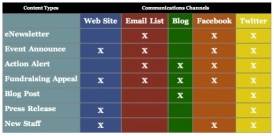
Publishing Matrix

Publishing Matrices can be an effective way to have a skeleton communications plan at your organization. The simple grid dictates to what communications channels different messages go. For instance, when there is a new blog post, do you tweet it? Post it on Facebook? Call up your members on the phone and tell them to read it? What is in bounds for each type of content that you’re trying to push out? Agreeing upon these standard procedures can give multiple communicators more freedom in the content that they need to push out to their individual communities.

For more information about setting up a Publishing Matrix check out:

http://blog.socialsourcecommons.org/2009/10/online-communications-publishing-matrix-tools/

Have an Organizational Online Communications Policy

Agreed-Upon Plan

What is in-bounds and what is out of bounds for the content of the communications at your organization? Do your fellow staff know? Do you know? Having agreed-upon standards for what your organization comments on, the language that is ok to use and the process to get it done is essential to have a fully functional communications team at your organization.

Consider Scheduling Content to Post Automatically

Many communications tools like Hootsuite, Tweetdeck, VerticalResponse and WordPress allow you to set up content to go out automatically in the future. This can be useful if you’re working with another person on content. Communicators, at their weekly meeting, can agree on content AND publish dates while everyone is present. These messages can be added to the message calendar and then set up to go out automatically thereby getting group buy-in for communications.

Consider Multiple Accounts

Multiple Accounts

For most small nonprofits, having one Facebook page is enough of a committment. Building up a community, engaging allies in conversation and providing collaborative space can take time. The thought of doubling that committment to have two Facebook pages? Yikes. Bite off only as much as you can chew. Start with one social media account, work with it a while and see how it goes. If your organization has got that account down pat, think about adding another if there is an organic reason to (e.g. a separate community within the work that you do, a specific news stream that isn’t relevant to your general audience, etc.) AND if you have staff capacity to do so. Hopefully, if and when you do decide that you want to have more than one Twitter or Facebook account, you will have the other tips above in place (e.g. regular comms mtg, shared strategy docs) so the account addition is logical and makes sense for the organization.

If you do have multiple accounts here are some general tips in addition to those above:

  • Some orgs find it useful to “sign” their posts so people know which communicator is posting. One convention (on Twitter) is to use a karat with your initials:

    Check out this new article from @aspirationtech: http://bit.ly/123 ^MG

  • Use the main organizational account to repost content from the the other accounts. For example, selectively retweet tweets from program-specific Twitter accounts through the main org account to highlight the different programs and issue areas.

To wrap up, remember a few things as you embark on your merry multiple-communicators strategy at your organization:

  • Share documents
  • Check-in regularly
  • Have a point person for communications as a whole
  • Take small steps

What are your tips for managing communicators at your org?


Connect with SSC


RSS Feed  Twitter  Facebook

Aspiration Publications